The Gear Longevity Manual: How to Clean and Protect Your Professional Camera Equipment
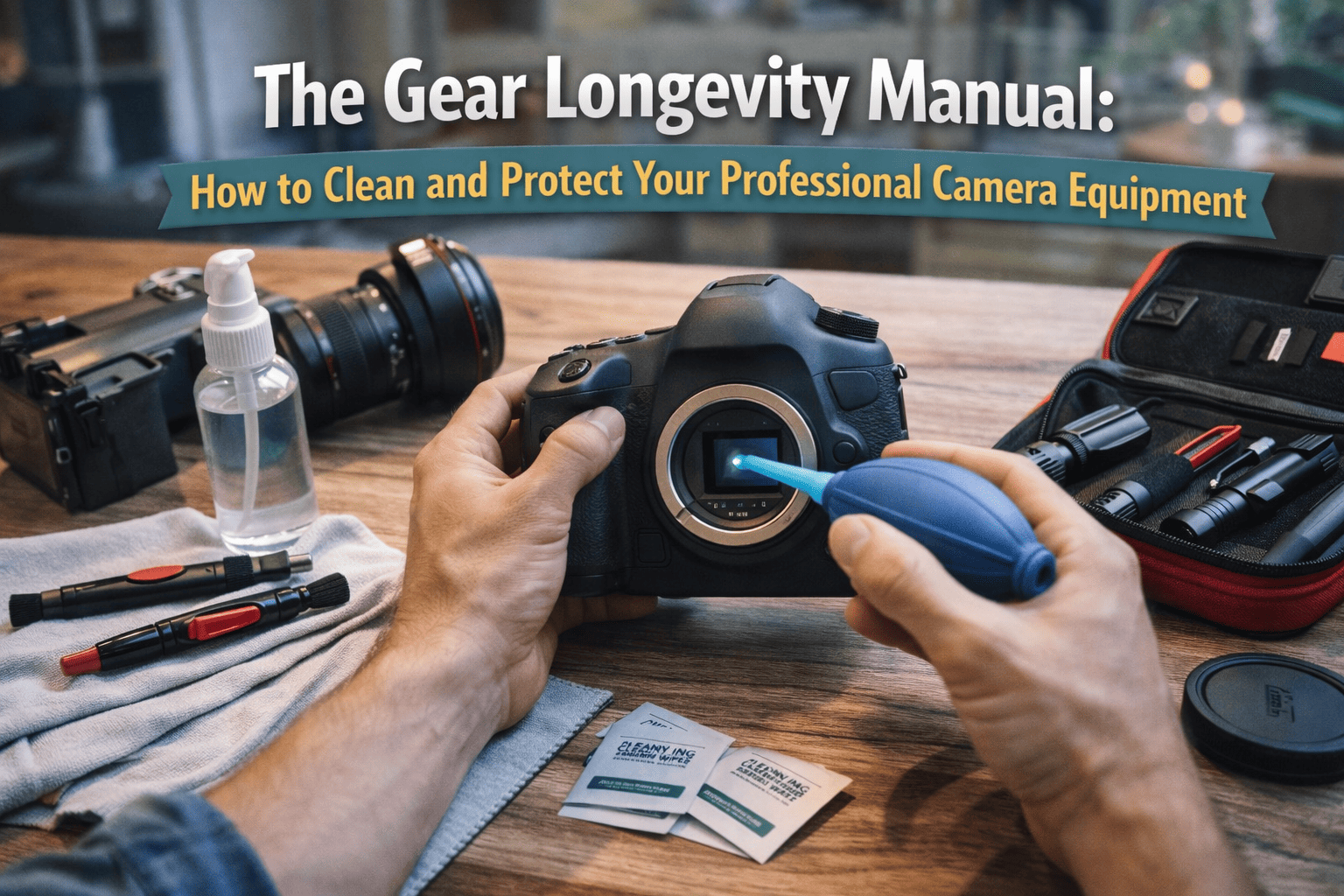
A professional camera can last a decade if maintained correctly. This manual moves beyond "wiping the lens" to provide a deep-cleaning and protection strategy used by high-end rental houses to keep equipment in "Like New" condition.
Phase 1: The Sensor Integrity Protocol
The sensor is the heart of your camera. A single speck of dust can appear as a dark spot in 4K footage that is nearly impossible to remove in post-production.
1. The "Detection" Step
- The Workflow: Set your camera to Aperture Priority (A) mode at f/22. Take a photo of a clean white wall.
- The Analysis: Zoom in on the photo; any dark spots indicate dust on the sensor.
2. The Cleaning Hierarchy (Dry to Wet)
- The Air Blower: Use a "Rocket Blower" with the camera held upside down. Never use canned air.
- The Sensor Brush: Use a static-charged brush to lift dust without direct contact.
- The Wet Swab: Use a sensor-sized swab and one drop of fluid. Swipe in one smooth motion—do not scrub.
Phase 2: Lens Optics & Maintenance
Modern lenses have chemical coatings that can be stripped by improper cleaning.
- The Outer Element Workflow: Always use a blower or brush before using a cloth to avoid scratching the glass with grit. Apply alcohol-free cleaner to the cloth, not the lens, and wipe in a circular motion from the center outward.
- Preventing Fungus: Store lenses in a "Dry Cabinet" or sealed bin with Silica Gel packets to prevent fungal growth.
Phase 3: Battery & Electronic Health
Batteries and electronic contacts are common failure points in the field.
1. The "Storage Charge" Rule
- The SOP: If not shooting for 14+ days, store Lithium-ion batteries at 50%–60% charge. Storing at 0% or 100% degrades internal chemistry.
2. Port & Contact Cleaning
- The Workflow: If you encounter "Lens Not Found" errors, wipe the gold contacts on the lens and camera mount with a microfiber cloth and 90%+ isopropyl alcohol.
Phase 4: Extreme Environment Protection
Filming in rain, sand, or snow requires an "Environmental Shield" workflow.
- The Rain Hack: Use a clear plastic bag and a rubber band around the lens hood if a professional cover is unavailable.
- The Cold Weather SOP: When moving from freezing outdoors to a warm room, keep the camera in a sealed bag for 2 hours to prevent internal condensation.
- The Sand Protocol: Use a "UV Filter" as a sacrificial layer and never change lenses in open, sandy air.
##CameraCare #FilmmakingGear #TechTips #FilmFreebies